You have probably tried it. Cross-legged on a cushion, eyes closed, a calm voice asking you to notice your breath — and inside ninety seconds you were drafting an email in your head, replaying yesterday's awkward meeting, and quietly wondering whether you were doing it wrong. That is not a character flaw. Sitting still with your eyes shut is one particular technique, and it happens to suit a minority of people. Mindfulness itself is broader and much plainer: noticing what is actually happening while it is happening. You can do that standing up, walking, scrubbing a pan, or waiting for a kettle. What follows are seven practices that need no cushion, no app and no silent room.
1. Borrow an anchor you already have
Attaching a new habit to an existing one is a familiar trick, and it works for attention as well as it works for flossing. Choose a physical action that happens many times a day and let it become a small bell. The most reliable is a door handle. Every time your hand lands on one — bathroom, office, front door — feel it properly. The temperature of the metal, the give of the latch, whether your grip is tighter than it needs to be.
You are not adding a task to your day. You are putting a hook into a moment you were going to pass through anyway. Other anchors that work well: the click of a seatbelt, the first step off a kerb, the sound of a kettle coming to the boil, a key turning in a lock. Pick one. Feeling faintly ridiculous for the first two days is normal.
2. Take three breaths at the threshold
Transitions are where most of us lose the thread. You finish a call and are already halfway into the next thing, carrying the residue of the first. Try this instead: before you walk into a building, a meeting room, or your own kitchen at the end of the day, stop for three breaths. Three, not ten. Ten is long enough to feel like a chore, and chores get abandoned.
Let the out-breath be slightly longer than the in-breath if that feels comfortable. Keep your eyes open, keep your hands where they are, and if someone walks past, you are just a person standing still for a second. Then go in.
3. Wash one thing slowly — properly slowly
Washing up is one of the most honest attention exercises available, because it is boring enough that the mind has nothing to do but wander, and useful enough that you cannot skip it. Take a single item: a mug, a pan, a chopping board.
- Notice the water temperature on your hands before you start.
- Feel the weight of the object and how it changes as it fills or empties.
- Listen to the sound of the water rather than narrating it.
- When you notice you are somewhere else — an argument, a shopping list, a deadline — come back to the soap. No commentary on the wandering.
Do one item this way, not the whole sink. The point is not slow living as an aesthetic. It is finding out how much of your day you spend somewhere other than where your hands are.
4. Walk with a single question
Walking meditation usually fails for the same reason seated meditation does: "just walk and notice" is too vague a brief for a busy brain. Give attention a job instead. Pick one question for the length of a short walk and keep returning to it.
- What can I hear right now? Traffic, a fridge hum, your own footsteps, birds you could not name.
- What is the ground doing under my feet? Paving, gravel, grass, a slight slope.
- Where is my jaw? Clenched, or loose? Most people discover the answer is clenched.
One question per walk. When you notice you have drifted into planning, come back to the question without scolding yourself. The return is the practice; the drift is not a failure.
5. Close the loop before you open the next tab
Notice the moment before you check your phone — not the checking, the moment before. There is usually a small physical signal: the hand reaching, the glance at the pocket, the pause before a click. Catching that signal is worth more than an hour of trying to think about nothing.
Try a single breath with your hand on the mouse or your thumb hovering over the screen, and ask two questions: What am I about to do, and what am I hoping to get from it? Sometimes the answer is "boredom" or "I don't want to start the difficult thing". Sometimes you will open the tab anyway. The noticing is the exercise, not the resisting.
6. Listen as if you will be asked to repeat it
In most conversations, half of your attention is spent rehearsing your reply. The next time someone tells you something, try holding your response back for one full second after they finish. That second is longer than it sounds, and it changes what you hear.
You will notice the urge to interrupt rise in your chest like a hand going up in class. You do not have to obey it. Do this in one conversation a day, not all of them — listening this closely is tiring at first, and pretending otherwise leads people to give up.
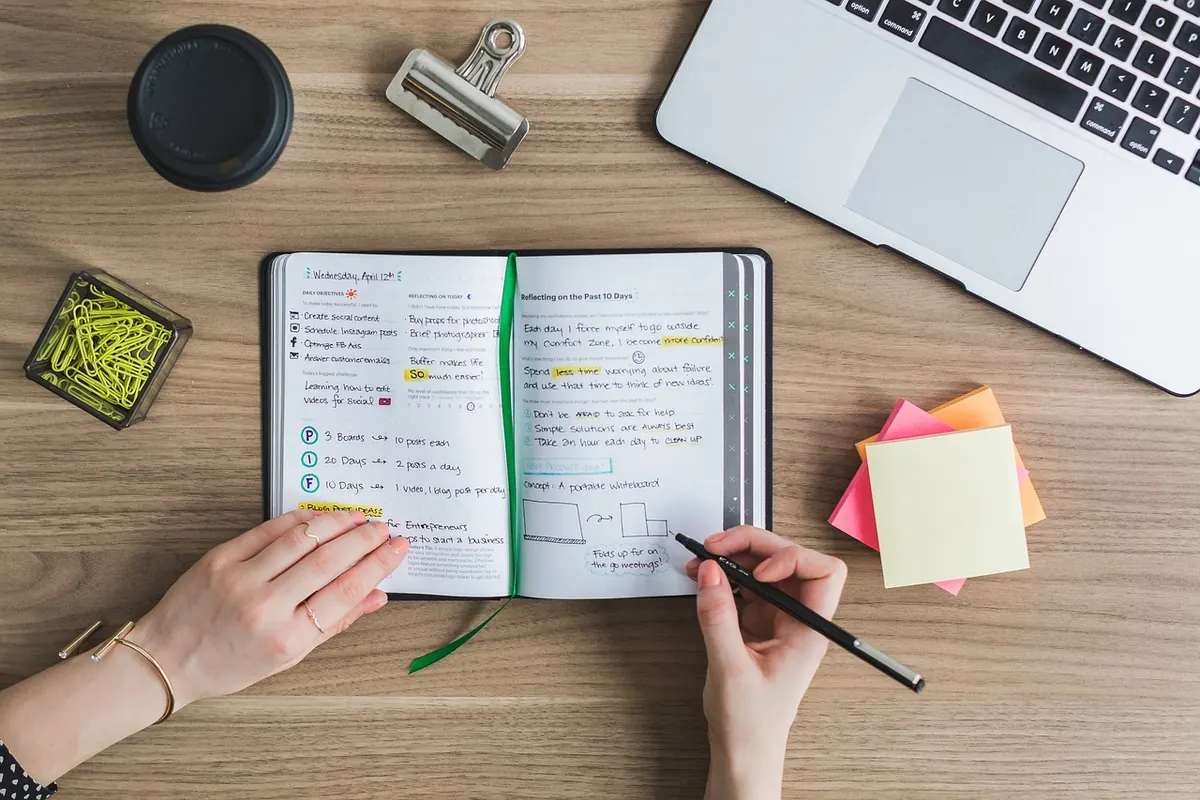
7. Write five lines before bed
Not a journal, and not a gratitude list you feel obliged to perform. Five short lines, as factual as a receipt:
- Three specific things you noticed today — the smell of a shop doorway, a colleague's laugh, the colour of the sky at six.
- One thing you felt, named plainly. Irritated. Relieved. Flat.
- One thing you are putting down until tomorrow.
The value lies in the retrieval. To write three specific things, you have to scan the day for actual detail rather than its overall verdict. That scan is the practice, and it takes about ninety seconds.
Making it stick without turning it into homework
Choose one practice from this list. One. Run it for a week before adding anything else, and keep it under two minutes so it never becomes a decision you can lose. Forget streaks — they turn attention into a scoreboard. Expect to forget the practice entirely for days at a time; the useful moment is when you remember, not the unbroken run.
If you want a single test of whether any of this is working, use this one: do you notice, even once a day, that you are somewhere doing something? That is enough. And if sitting with your own attention brings up anxiety or difficult memories that do not settle, that is worth discussing with a qualified professional rather than pushing through alone.
Photo: RDNE Stock project / Pexels